
Autoimmune America: Addressing our country’s division (A morning meditation)

***

Reading: Genesis 4: 1-15

The man had relations with his wife Eve,
and she conceived and bore Cain, saying,
“I have produced a man with the help of the LORD.”
Next she bore his brother Abel.
Abel became a keeper of flocks, and Cain a tiller of the soil.
In the course of time Cain brought an offering to the LORD
from the fruit of the soil,
while Abel, for his part,
brought one of the best firstlings of his flock.
The LORD looked with favor on Abel and his offering,
but on Cain and his offering he did not.
Cain greatly resented this and was crestfallen.
So the LORD said to Cain:
“Why are you so resentful and crestfallen.
If you do well, you can hold up your head;
but if not, sin is a demon lurking at the door:
his urge is toward you, yet you can be his master.”

Cain said to his brother Abel, “Let us go out in the field.”
When they were in the field,
Cain attacked his brother Abel and killed him.
Then the LORD asked Cain, “Where is your brother Abel?”
He answered, “I do not know. 
Am I my brother’s keeper?”
The LORD then said: “What have you done!
Listen: your brother’s blood cries out to me from the soil!
Therefore you shall be banned from the soil
that opened its mouth to receive
your brother’s blood from your hand.
If you till the soil, it shall no longer give you its produce.
You shall become a restless wanderer on the earth.”
Cain said to the LORD: “My punishment is too great to bear.
Since you have now banished me from the soil,
and I must avoid your presence
and become a restless wanderer on the earth,
anyone may kill me at sight.”
“Not so!” the LORD said to him.
“If anyone kills Cain, Cain shall be avenged sevenfold.”
So the LORD put a mark on Cain, lest anyone should kill him at sight.

Adam again had relations with his wife,
and she gave birth to a son whom she called Seth.
“God has granted me more offspring in place of Abel,” she said,
“because Cain slew him.”

The Word of the Lord.

***

Image result for cain and able

***

Autoimmune diseases – such as type 1 diabetes and arthritis – confuse the body’s natural defense system, so that the body can no longer tell the difference between a healthy and an unhealthy cell; meaning, normal cells are mistaken for a threat.

As a result, the body begins attacking itself.
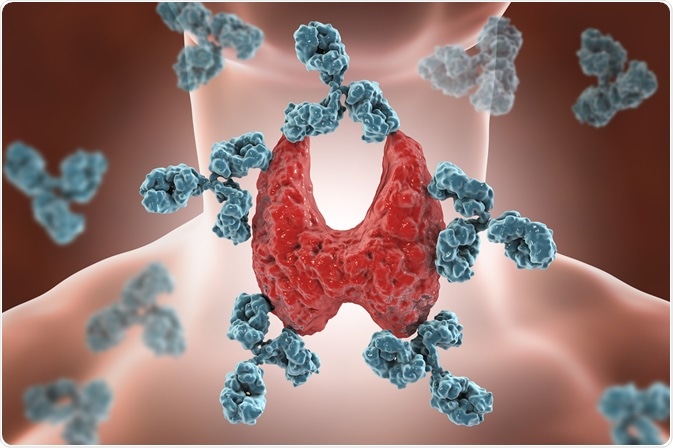
Image result for autoimmune disease

***

Doesn’t it feel like our world is attacking itself? 

Although we’re all equal and loved in the eyes of God, sometimes one human being unfairly mistakes another for a threat, as if that person doesn’t belong in our society, much like a malignant cell in the body.

Consider this in the context of religion, racism, economic inequality, or the political division rampant across our country. These are like autoimmune diseases attacking our world.

***

In our first reading from the Book of Genesis, Cain mistakes his brother, Abel, for a threat. Cain’s insanely jealous, because the Lord favored Abel’s offering over his. As a result, he lures his brother out into a field and kills him.

Immediately, the Lord reveals himself and says to Cain, “Where is your brother, Abel?” 

Cain’s response becomes the first question human beings ever ask God in the bible: “Am I my brother’s keeper?”

***

How can we reconcile this ancient and malignant “us versus them” mentality?

Perhaps it will never be completely removed; not until the Lord returns. But you and I should work for greater peace in our homes, in our Church, and in our broader community.

In the words of Saint Francis of Assisi, “Lord, make me an instrument of your peace. Where there is hatred, let me sow love; where there is injury, pardon; where there is darkness, light; where there is sadness, joy.”

Being proactive in working for peace can start the healing process we’re so direly in need of today.

***

Image result for make me an instrument

The Leper in me: Finding New Life in Christ (A Sunday Meditation)

***

Gospel: Mark 1: 40-45

A leper came to Jesus and kneeling down begged him and said,
“If you wish, you can make me clean.”
Moved with pity, he stretched out his hand, 
touched him, and said to him, 
“I do will it. Be made clean.”
The leprosy left him immediately, and he was made clean.
Then, warning him sternly, he dismissed him at once. 

He said to him, “See that you tell no one anything,
but go, show yourself to the priest 
and offer for your cleansing what Moses prescribed;
that will be proof for them.”

The man went away and began to publicize the whole matter.
He spread the report abroad
so that it was impossible for Jesus to enter a town openly.
He remained outside in deserted places,
and people kept coming to him from everywhere.

The Gospel of the Lord.

***

Image result for jesus heals a leper

***

We continue following Jesus in Mark’s Gospel. Jesus has moved out of the synagogue, out of Simon Peter’s house, and into the open fields, where the impure wandered. 

He’s now in the land of lepers.

Leprosy was a bit like COVID; it quarantined people. But lepers weren’t quarantined for two weeks; they were isolated for the rest of their lives, living like a separated species – defiled; unapproachable; even sub-human.

***

When news of Jesus’ healing power reached the lepers, hope began to stir in that wretched community, particularly in the heart of one man, whose life was about to change.

Courage welled so high in his poor soul, that he broke social conventions, barreling through a crowd of people like a bowling ball rolling through pins. 

Knowing his chance had come, he threw himself at the feet of Jesus, looking like no more than a desperate mass of rotting flesh.

In other gospel accounts, this man is described as “full of leprosy,” meaning the disease had run its course. 

He was like a walking dead man, forced by society to maintain a disheveled appearance crying out, “Unclean! Unclean!” anytime his stinking body approached another human being.

It was even illegal to greet him. 

One can only imagine his crushing sense of worthlessness and despair.

***

But Jesus changes everything.

***

Eight times in Mark’s Gospel, Jesus touches the untouchable. 

He touches Simon Peter’s mother-in-law who was deathly ill; he places his thumbs over a blind man’s eyes; his finger into a deaf man’s ears; his palm on the coffin of a mother’s boy; and today Jesus touches the putrid flesh of a desperate leper.

Lying flat on his face, dragging his lips across the dirt, the desperate leper cries out, “If you will it, you can make me clean.”

You can take my leprosy. My pain. My feelings of worthlessness. My loneliness. 

And make me clean.

Stirred with compassion, Jesus kneels down, touches him, and says, “I do will it. Be made clean.”

***

Image result for jesus touches

***

The healing is sudden and complete

This man’s eyebrows have grown back; his nubs have grown into hands; the stumps of his legs morphed into feet; the pus and scabs on his body, transformed into silky skin. 

He’s no longer crying out, “Unclean! Unclean!” 

But, “I’m clean! I’m clean!”

***

That is what Jesus can do for us.

He can take our impurities, our burdens, our pain, and make us clean.

***

After this miraculous healing, Jesus remains in the countryside.

The irony is stunning.

He cannot re-enter the city; by touching this leper, Jesus has become ritually impure, in a sense, making him the leper.

Still, the crowds come to him in droves, desperate to feel his healing touch.

Image result for jesus on calvary

***

What Jesus does for this leper foreshadows what he will also do at the Cross. 

Just as he takes this leper’s impurity upon himself, so at Calvary, Jesus will bear the world’s sins, tasting death in order to free us from everlasting death, the greatest impurity of all.

***

Think of today’s Gospel as a parable for our own lives.

Just as this leper was infected with leprosy, so we’ve all been affected by sin.

The nature of leprosy, with its deceptive beginnings, its slow progress, its destructive power, and the ultimate ruin it brings, makes it a powerful symbol of sin.

Sin ruins us; it damages our relationships; it separates us from others; it brings us down and can even make us feel unworthy at times.

Jesus wants to take those burdens from us.

***

So, where do we need to be made clean? Where are we in need of the Lord’s healing touch?

***

“I did not come to call the righteous,” Jesus says, “but sinners.”

Lent is the perfect time for us to grow in self-awareness; to call upon the Lord and ask for his help.

Then Jesus will look at us compassionately and say, “Be made clean.”

***

Image result for jesus be made clean

Where to go when you’ve made a mistake (A morning meditation)

***

A reading from the Book of Genesis 3: 1-8:

Now the serpent was the most cunning of all the animals
that the LORD God had made.
The serpent asked the woman,
“Did God really tell you not to eat
from any of the trees in the garden?”
The woman answered the serpent:
“We may eat of the fruit of the trees in the garden;
it is only about the fruit of the tree
in the middle of the garden that God said,
‘You shall not eat it or even touch it, lest you die.’”
But the serpent said to the woman:
“You certainly will not die!
No, God knows well that the moment you eat of it
your eyes will be opened and you will be like gods
who know what is good and what is evil.”
The woman saw that the tree was good for food,
pleasing to the eyes, and desirable for gaining wisdom.
So she took some of its fruit and ate it;
and she also gave some to her husband, who was with her,
and he ate it.
Then the eyes of both of them were opened,
and they realized that they were naked;
so they sewed fig leaves together
and made loincloths for themselves.

When they heard the sound of the LORD God moving about in the garden
at the breezy time of the day,
the man and his wife hid themselves from the LORD God
among the trees of the garden.

The Word of the Lord.

***

Image result for adam and eve

***

“When they heard the sound of the LORD God moving about in the garden…the man and wife hid themselves.”

***

Our reading from Genesis describes the first time human beings sin against God. And what do Adam and Eve do?

They run away and hide.

***

Perhaps they’re afraid that God will punish them.

***

What is my own image of God?

Is he someone whom I must hide from when I sin? Is he out to punish me?

Or is he a merciful Father, who loves me, seeks me out, and wants to heal me?

***

God answers this question for us.

As soon as he discovers that Adam and Eve have sinned, he seeks them out. He doesn’t set the garden on fire; rather, he cries out to them, “Where are you?”

God isn’t looking to punish them; he’s looking to dialogue with his children, to help them understand why their actions were harmful, and to show them how to move forward. 

The same is true for us. 

Whenever we sin against God or our neighbors, the temptation is to run away and hide.

But we should run to our Father, instead, particularly in confession, in order to start the process of healing. If it’s been a while, then consider going during Lent.

***

“When they heard the sound of the LORD God moving about in the garden…the man and wife hid themselves.”

But the Lord shows us that we should never hide from him; rather, run to Him who has loved us and given himself for us.

***

Image result for the lord's forgiveness